
Shoreline bioengineering projects might seem intimidating, but they don’t have to be! Two new MGLP documents for shoreline property owners and contractors provide information about these lake-friendly erosion shoreline erosion control methods.
An Introductory Guide to Bioengineering
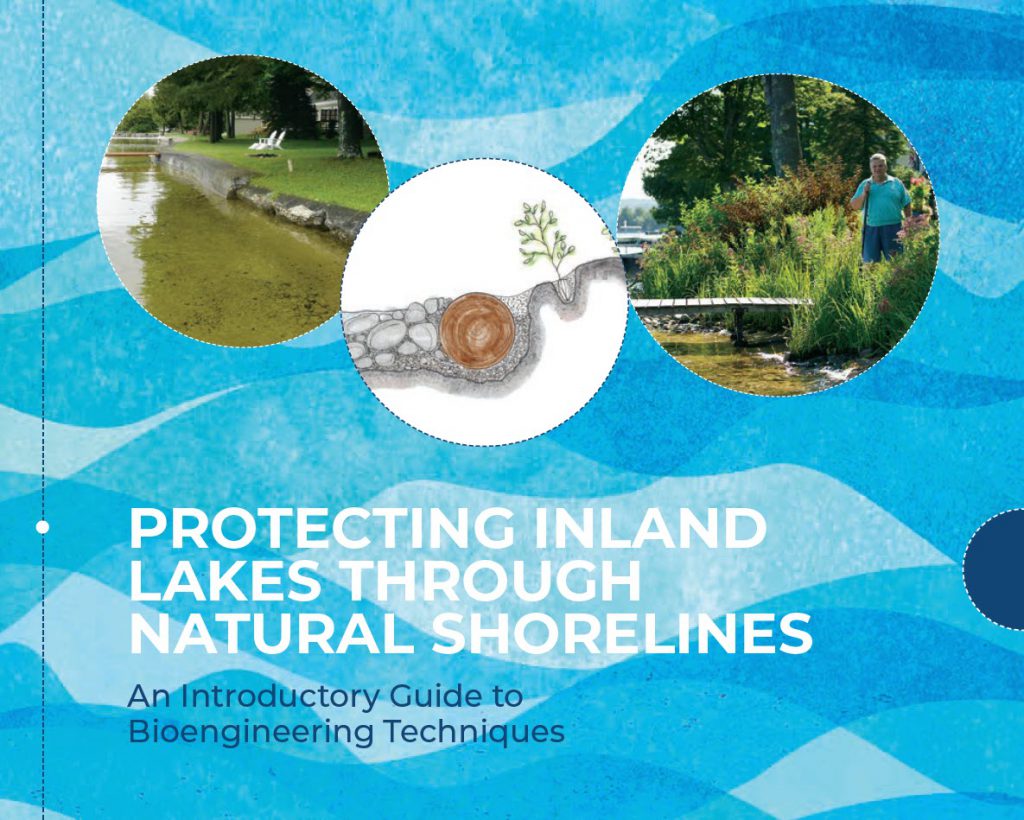
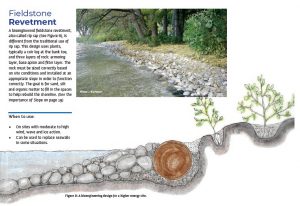
Lakefront property owners will appreciate the “Protecting inland lakes through natural shorelines: An introductory guide to bioengineering” booklet. This guide provides information for lakefront property owners who are considering installing a bioengineered shoreline on their property. The guide walks through ways to identify erosion and its causes, and shows how natural shorelines can reduce this wave erosion. It introduces the reader to bioengineering, which is a nature-based approach that includes plants as an alternative to seawalls and rock rip rap that are less friendly to the lake. Using examples of different materials, schematics of common bioengineering designs, and descriptions of the considerations required for a successful project, the guide provides a basic understanding that enables a shoreline property owner to discuss and pursue installation of bioengineered shorelines with contractors, conservation organizations, or other professionals.
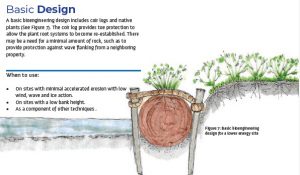
Think you already know all about bioengineering? State of the art practices have advanced significantly since the introduction of techniques for low-energy shorelines decades ago. The guide provides designs and real world case studies for techniques that are applicable across a wide range of shorelines, from those that receive only minor wave action to designs that have been successful on 17,000-acre lakes!
Do you work with shoreline property owners and want free copies of the Introductory guide to bioengineering? The MGLP has grant funding for a limited distribution of this document throughout the nine states in our service area (IA, IL, IN, MI, MN, ND, OH, SD, & WI). To request copies, please fill out this form by May 15, 2026. Electronic copies are also available for anyone to download, print, or distribute.

Contractor Tip Sheet
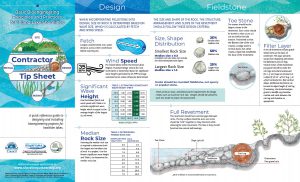
For shoreline contractors, conservationists, and other professionals, the Contractor Tip Sheet provides a wealth of information to assist with designing successful bioengineering projects. The tip sheet walks the user through the process of assessing typical wave heights based on the lake’s fetch, and then providing recommendations for rock sizes used in the stone toe of rock revetment designs. Cross-sectional and plan-view diagrams provide starting points for typical designs that can be modified based on site conditions. There’s even a table to assist with estimating the volumes of materials required for rock revetments in front of coir logs of various sizes.
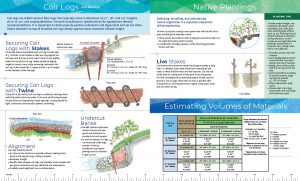
The Contractor Tip Sheet is available for anyone to download, print, or distribute.