
These free webinars address a diverse range of lake and fish habitat management issues such as aquatic plants, climate change, watershed conservation, and much more.
Check out our lineup below and register using the links provided. You can view the full list of webinars plus recordings of past webinars on our Lake Conservation Webinars webpage.
Healing Ogaa (Walleye) waters: Lessons and future directions for inland fisheries rehabilitation
| Holly Embke March 3, 2026 at 1 PM Central Register for webinar | 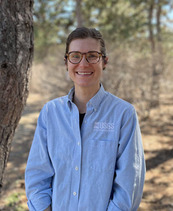 |
Culturally, economically, and nutritionally valuable inland fisheries face many new challenges on top of chronic disturbances. In the upper midwestern United States, declines in cool- and coldwater fisheries have been observed, including ogaa/walleye Sander vitreus. In response to population declines, agencies have implemented rehabilitation efforts, and the frequency and intensity of efforts have increased recently given declines. Evaluating intervention outcomes is critical for institutional learning and to understand strategy effectiveness, but is difficult to do when multiple interventions are applied concurrently and in the absence of replication or controls. This review documents walleye rehabilitation efforts in the upper Midwest U.S., where a rehabilitation effort was defined as a coordinated effort with the stated intention to restore a self-sustaining population such that it required limited-to-no further intervention. We discuss: (1) strategies used; (2) similarities and differences in metrics of success; (3) factors leading to success; and (4) recommendations that may increase future successful rehabilitation. Strategies included harvest regulation changes, stocking, fish community manipulations, habitat enhancement, and partner discussions. Overall, evaluations of environmental, habitat, and fish community factors causing walleye population declines were not included in most rehabilitation plans before implementation. This review highlights an increased need for ecosystem-based fisheries management principles and cultivating ecological conditions that favor walleye as a potential path for future rehabilitation plans. Lessons drawn from rehabilitation plans are applicable to global inland fisheries to inform the conservation of declining fish populations.
Long-term and regional-scale data reveal divergent trends of different climate variables on fish body size over 75 years
| Peter Flood March 17, 2026 at 1 PM Central Register for webinar |  |
Across many different groups of animals, climate change has induced a general shift towards smaller body sizes. However, support for climate-induced reductions in body size is mixed with some species growing larger under warmer conditions, and underlying mechanisms are under debate. To address these inconsistencies, we evaluated if mean length-at-age (a proxy for growth) changed from 1945 to 2020 for age classes of 13 freshwater fish species. Then, we disentangled the impacts of climate change on growth from other environmental factors. We found that many age classes were decreasing in mean length through time. Effects of growing degree days and mean annual surface water temperature varied by thermal guild and were opposite of each other for cool- and cold-water adapted fishes. Overall, we found widespread decreases in length, including age classes from all thermal guilds and juveniles (contrary to some theoretical assumptions). Currently, we are using museum specimens to analyze trends for more species and incorporating additional trait data to better understand what makes some species more or less vulnerable to climate-induced changes in body size.
Fish tales: Visual storytelling to advance freshwater fisheries conservation
| Sean Landsman March 31, 2026 at 1 PM Central Register for webinar | 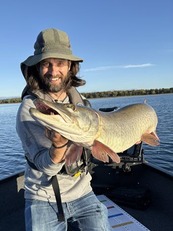 |
Freshwater ecosystems are among some of the most imperilled worldwide. There are a variety of reasons for this, but among these is a general sense of apathy toward freshwater among not only the public, but also policymakers. Indeed, it is perhaps hard to expect people to care about things they cannot easily see with their eyes. Raising awareness about, and fostering connections with, freshwater biodiversity among the public and policymakers is thus no easy task, but tools such as underwater photography can help move the needle. In this presentation, I will discuss the outsized importance of freshwater ecosystems and some of the factors contributing to the biodiversity crisis facing these ecosystems. I will also discuss the potential influence of underwater photography on public perceptions of freshwater life, especially fish, and share images and stories from my experiences underwater.
Hot water, low oxygen, and changing fisheries: How lake conditions are shifting and how anglers are responding
| Thomas Detmer April 7, 2026 at 1 PM Central Register for webinar |  |
As surface waters in lakes and reservoirs warm earlier in the year and reach higher temperatures, cold water fish are increasingly pushed into the deepest, coldest parts of the lake. Yet deep, cold water does not always contain enough oxygen to remain suitable, creating a vise that squeezes usable habitat as fish are forced to choose between hot surface waters and low-oxygen conditions at depth. As these pressures intensify, the volume of habitable water can shrink dramatically, compressing fish into smaller and smaller space. This changing aquascape will produce clear habitat “winners” and “losers,” depending on species’ temperature and oxygen tolerances. This shrinking habitat doesn’t just affect fish, it fundamentally alters how anglers connect to fisheries. Specifically, we will discuss how angler success and behavior are evolving with changes in fish stress and behavior. We will then examine how angler responses vary by location and how these patterns change across spatial scales within lakes, across regions, and nationwide. Finally, we will explore what these coupled ecological and human shifts may mean for conservation and management.
MGLP Lake Conservation Grant
| Joe Nohner September 1, 2026 at 1 PM Central Register for webinar |  |
The Midwest Glacial Lakes Partnership supports conservation of inland lakes through its Lake Conservation Grant. The grant annually distributes approximately $300,000 in funding to support on-the-ground conservation projects, science, and outreach to benefit glacial lakes. The grant will operate on a new timeline this year, with applications announced in the late summer and due in the fall. This webinar will walk through the process of applying to the grant, provide insight into the characteristics of successful applications, describe the process and timeline for grant selection, and share basic information about administration of these grants.
Disentangling the historical impacts of warming and fishing on exploited freshwater fish populations
| Luoliang Xu October 13, 2026 at 1 PM Central Register for webinar |  |
Climate warming is reshaping thermal habitats in inland lakes, often reducing suitable conditions for cold- and cool-water species while expanding habitat for warm-water species. This shift raises an important management question: can redirecting recreational harvest pressure toward warm-water species help buffer climate-driven declines in vulnerable cooler-water fisheries? In this presentation, I will introduce this idea, examine its management implications, and discuss alternative science-based strategies for sustainably managing freshwater fisheries in a warming world.
Lake weeds or plant communities? Some thoughts on Eurasian watermilfoil management, control prioritization, and new work to nurture care and appreciation
| Alison Mikulyuk & Katie Hein October 20, 2026 at 1 PM Central Register for webinar |  |
This presentation will start with some findings about Eurasian watermilfoil management and management prioritization – in that work, we wanted to better understand and provide context to some of the effects of whole lake herbicide treatments we observed in survey data. From there, we developed a model to predict lakes likely to experience future Eurasian watermilfoil introductions and lakes likely able to support dense populations. We hope that information could help guide smart prevention and smart management. More recently, we are interested in expanding the way folks are able to think and talk about plant communities – by naming, narrating, and celebrating unique community assemblages, we hope eventually to enable people to appreciate, connect to, and experience part of the natural world that usually remains hidden.
Protecting land for water quality: Watershed-based land conservation strategies
| Steve Epting October 27, 2026 at 1 PM Central Register for webinar |  |
Nonpoint source (NPS) pollution, or polluted runoff, is the predominant cause of water quality problems in the United States. Land protection can play a critical role in protecting waters by maintaining forests, riparian buffers, and other critical natural areas that filter polluted runoff. Protected lands also help ensure the durability of water quality restoration by preventing new pollutant loads. Over the last several years the USEPA has worked to highlight the role of land protection as a NPS management strategy and strengthen partnership opportunities between clean water programs and land conservation community. This webinar will spotlight this work and how its relevance to protecting lake ecosystem health.
Walleye stocking success in the Midwestern USA
| Robert Davis & Daniel Isermann November 17, 2026 at 1 PM Central Register for webinar |  |
This study evaluated stocking success of Walleye in lakes and reservoirs across the Midwestern United States to inform stocking practices for state agencies. Demand for Walleye stocking may increase if climate change limits the potential for natural recruitment in lakes. Consequently, the strategic distribution of Walleye stocking may maximize fishing opportunities. Latitude and year explained relatively little variation in stocking success compared to within‐lake variation. Relative abundance of Largemouth Bass was an important indicator of Walleye stocking success for fry and fingerlings, with stocking success generally decreasing with increased bass abundance. There was an interaction between lake surface area and growing degree‐days, as large lakes (>2500 ha) seemed to be more conducive to Walleye stocking success regardless of growing degree‐days. The models that we developed did not accurately predict exact levels of Walleye stocking success but were 92–94% accurate in predicting whether the stocking success of both fry and fingerlings would be at or above the 50th percentile. These findings may help to inform the management and stocking allocation of Walleye and suggest that future increases in Largemouth Bass abundance and growing degree‐days could limit the effectiveness of stocking in some lakes.